How to Eat Out Safely with Celiac Disease: Restaurant Tips
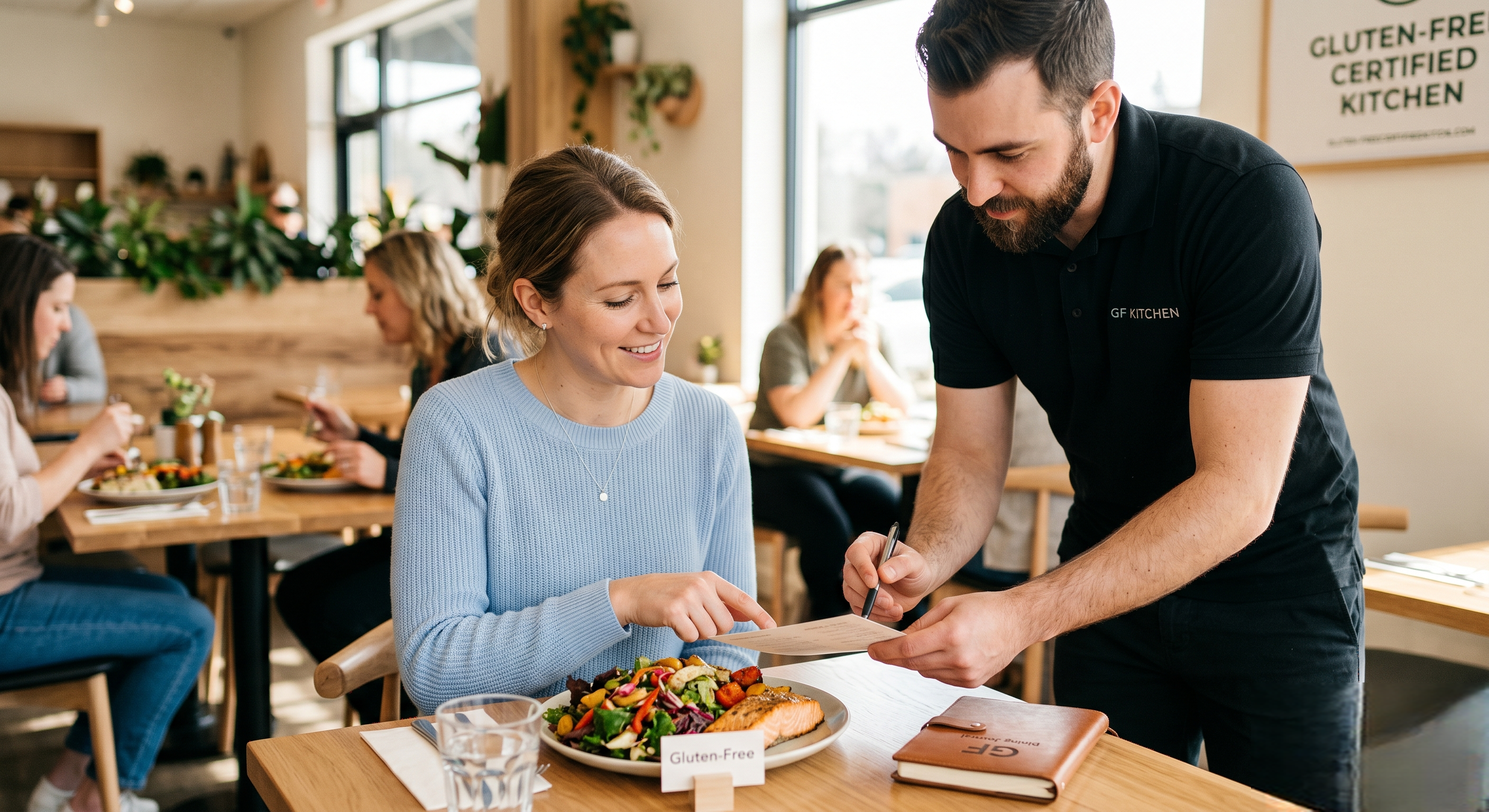
Eating out is one of the great pleasures of modern life — a chance to celebrate, connect, and try food you wouldn't make at home. For the roughly 1% of people worldwide living with celiac disease, however, restaurants can feel less like a treat and more like a minefield. According to the Celiac Disease Foundation (celiac.org), even tiny amounts of gluten — as little as 20 parts per million — can trigger intestinal damage in people with celiac disease, and a 2018 study published in the American Journal of Clinical Nutrition found that more than 30% of meals labeled "gluten-free" in restaurants tested positive for detectable gluten. The good news: with the right strategy, you can dine out safely, frequently, and joyfully. This guide walks through the research-backed habits that experienced celiac diners use to stay symptom-free.
Why Restaurants Are Riskier Than You Think
The challenge of restaurant dining isn't usually the obvious gluten — most kitchens know that pasta and bread are off-limits for gluten-free guests. The real danger is cross-contact: invisible transfer of gluten from shared cookware, fryers, cutting boards, colanders, and even gloves. The Mayo Clinic emphasizes that for someone with celiac disease, cross-contact at the level of breadcrumbs on a grill or flour dust in the air can be enough to provoke an autoimmune reaction. Unlike a food allergy, celiac disease damages the villi of the small intestine over time, and the National Institute of Diabetes and Digestive and Kidney Diseases (NIDDK) notes that repeated low-level exposures — even without obvious symptoms — can drive long-term complications such as nutrient deficiencies, osteoporosis, and an elevated risk of certain lymphomas.
Compounding the risk, a PubMed-indexed 2019 study in Gastroenterology tracked celiac patients eating in restaurants and found that 32% of "gluten-free" pizzas and 27% of "gluten-free" pastas tested positive for gluten contamination. The takeaway isn't that eating out is impossible — it's that you cannot rely on menu labels alone. You need to build a layered defense that combines smart restaurant choice, clear communication, and a willingness to walk away when something feels off.
Step 1: Choose the Restaurant Strategically
Your safety odds shift dramatically based on where you eat. Dedicated gluten-free establishments are the gold standard, but they're rare in most cities. The next best option is a restaurant with a separate gluten-free menu, dedicated fryer, and staff trained on cross-contact protocols. Apps like Find Me Gluten Free and the Gluten Intolerance Group's GFFS (Gluten-Free Food Service) certification list let you filter for vetted options, and reading recent reviews from other celiacs is one of the highest-signal moves you can make.
Cuisines That Tend to Be Safer
- Mexican: Corn tortillas, rice, beans, and grilled proteins are naturally gluten-free, but watch for flour tortillas on shared griddles and seasoning blends with wheat.
- Indian: Many curries, dals, and rice dishes are safe, though watch for asafoetida (hing), which sometimes contains wheat.
- Thai and Vietnamese: Rice noodles and rice paper dominate, but soy sauce and oyster sauce often contain wheat — ask about tamari substitutes.
- Steakhouses and Seafood: Simple grilled proteins with vegetables are easy to make safe when ordered carefully.
Cuisines That Demand Extra Caution
- Italian, Chinese, and traditional bakeries: Flour is often airborne, and shared pasta water or woks make cross-contact nearly unavoidable.
- Buffets and brunches: Shared serving utensils almost guarantee cross-contact.
- Fast food: Shared fryers and rapid-pace kitchens make protocol failures common.
Step 2: Call Ahead and Communicate Clearly
One of the strongest predictors of a safe meal is calling the restaurant during off-hours — typically between 2 and 4 p.m. — and asking specific, protocol-focused questions. Don't ask "Do you have gluten-free options?" Instead, ask: "Do you have a dedicated gluten-free fryer? Do you change gloves and use clean cookware for celiac orders? Do you have a separate prep area?" The answers tell you whether the kitchen has thought about cross-contact at all. The Celiac Disease Foundation recommends identifying yourself as having a medical condition, not a preference — language matters, because servers triage requests differently when they understand the stakes.
When you arrive, repeat the conversation with your server and, when possible, ask to speak with the chef or manager. A short script that works: "I have celiac disease, which is an autoimmune condition. Even a crumb of gluten makes me sick for days. Can you help me figure out what's safe?" Most kitchen professionals respond well to direct, respectful communication, and many will go above and beyond once they understand it's medical. If a server seems dismissive, rolls their eyes, or insists "a little gluten won't hurt," consider it a signal to leave. Your gut is worth more than the reservation fee.
Step 3: Order Defensively
Even at celiac-friendly restaurants, certain orders carry less risk than others. Stick to dishes that are naturally gluten-free and require minimal modification — grilled fish with steamed vegetables, a salad with oil and vinegar, eggs cooked on a clean surface. Sauces, marinades, and soups are notorious hiding spots for wheat, malt vinegar, soy sauce, and thickeners. Avoid anything fried unless the restaurant has a dedicated gluten-free fryer; shared oil contaminates fries, vegetables, and proteins alike. If you love cooking your favorite restaurant dishes safely at home between outings, you can explore gluten-free recipes at GF Cooking for tested, naturally gluten-free versions of cuisines from around the world.
Watch out for these common hidden-gluten traps that even careful diners miss:
- Soy sauce in marinades, dressings, and stir-fries (request tamari or coconut aminos)
- Malt vinegar in chips, sauces, and pickles
- Imitation crab (surimi) in sushi rolls and seafood salads
- Modified food starch of unknown origin in soups and sauces
- Seasoning blends on fries, steaks, and roasted vegetables
- Egg dishes that include pancake batter to make them fluffy
Step 4: Travel and Restaurant Tools That Help
Modern celiac travelers arm themselves with translation cards, certified gluten-free snack backups, and apps that pre-screen menus. Equal Eats and Legal Nomads' translation cards explain celiac disease in over 50 languages and have helped thousands of travelers eat safely abroad. Some celiacs also carry portable gluten-detection devices like the Nima sensor, though research published in PubMed has shown these devices have meaningful false-negative rates and shouldn't replace careful ordering. They're best used as a confirmation tool, not a green light. For inspiration when planning safe meals at home before or after a trip, you can find practical gluten-free recipes at GF Cooking that travel well in lunch boxes and carry-ons.
Step 5: Have a Plan If You Get Glutened
Even with perfect protocol, accidental exposures happen. Surveys cited by the Celiac Disease Foundation suggest that the average celiac patient experiences an inadvertent gluten exposure several times per year. Symptoms can appear within hours or days and may include abdominal pain, diarrhea, brain fog, fatigue, headaches, and joint pain. While there is no cure for accidental glutening, supportive care helps: hydrate aggressively, rest, eat easily digested foods like bone broth and bananas, and consider digestive enzymes designed for gluten exposure (though research on their effectiveness remains preliminary). If symptoms are severe, persistent, or include signs of dehydration, contact your physician.
Key Takeaways
- Cross-contact is the real danger — even certified gluten-free dishes can be contaminated by shared fryers, grills, and utensils.
- Vet restaurants in advance using apps like Find Me Gluten Free, calling during off-hours, and asking protocol-specific questions about preparation.
- Communicate medically, not preferentially — say "celiac disease" and "autoimmune condition," and don't be afraid to speak with the chef directly.
- Order defensively by choosing simply prepared dishes, avoiding fried foods without dedicated fryers, and watching for hidden gluten in sauces and seasonings.
- Trust your instincts and have a recovery plan — if a server seems dismissive, leave; if you do get glutened, hydrate, rest, and give your gut time to heal.


Comments
Post a Comment