Gluten-Free Sourdough: Step-by-Step Starter and Loaf Guide
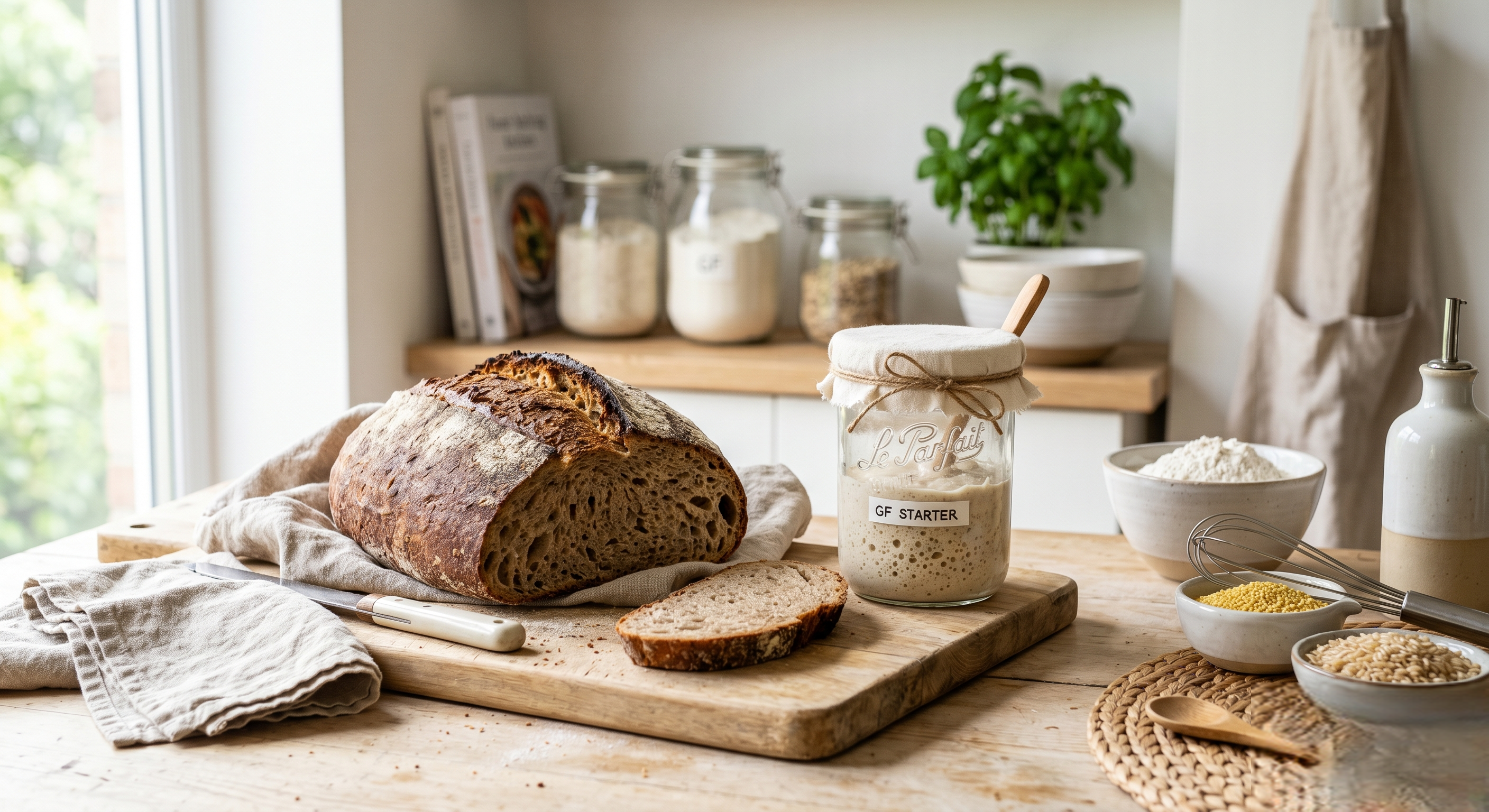
For anyone living with celiac disease or non-celiac gluten sensitivity, the aroma of fresh sourdough has often felt like a closed door. The good news: gluten-free sourdough is not only possible, it can rival its wheat-based cousin in flavor, crumb, and digestibility. With the right flour blend, a healthy wild starter, and a little patience, you can produce a loaf that is safe, nourishing, and genuinely delicious. This guide walks you through every step — from feeding your first jar of starter to slicing a finished boule — with science-backed reasoning along the way.
Why Gluten-Free Sourdough Is Worth the Effort
Sourdough fermentation relies on wild yeasts and lactic acid bacteria (primarily Lactobacillus species) that transform simple flour and water into a complex, tangy dough. Research published in PubMed indicates that long fermentation can improve mineral bioavailability, lower the glycemic index of baked goods, and produce organic acids that enhance digestibility. While conventional sourdough still contains gluten and is unsafe for people with celiac disease, the same fermentation principles applied to naturally gluten-free flours yield a loaf with superior texture and shelf life compared to standard gluten-free bread.
According to the Celiac Disease Foundation (celiac.org), even trace amounts of gluten — as little as 20 parts per million — can trigger intestinal damage in people with celiac disease. That means every ingredient, every utensil, and every surface used for gluten-free sourdough must be dedicated or thoroughly cleaned. The reward for that diligence is a bread that fits comfortably into a strict gluten-free lifestyle while delivering the sensory and nutritional pleasures of traditional sourdough. If you are looking for more fermented and flour-based ideas, you can explore gluten-free recipes at GF Cooking for inspiration alongside this guide.
Choosing Your Flours
The foundation of any gluten-free sourdough is a thoughtful flour blend. Single flours rarely produce a balanced loaf because each behaves differently during fermentation and baking. A reliable working blend uses whole-grain flours for fermentation activity and starches for structure. Whole-grain options like brown rice, sorghum, buckwheat, millet, and teff provide the wild microbes and enzymes that make a starter come alive, while starches such as tapioca, potato, and arrowroot lighten the crumb.
Recommended Starter Blend
- Brown rice flour — neutral flavor, abundant wild yeast on the bran
- Buckwheat flour — rich in microbes; ferments vigorously
- Sorghum flour — adds mellow sweetness and protein
Always confirm that flours are labeled certified gluten-free. Oats, buckwheat, and even rice are frequently cross-contaminated during milling, a risk well documented by the Mayo Clinic in its celiac patient education materials. Certification programs typically guarantee testing below 10–20 ppm gluten, providing the margin of safety celiac patients require.
Step-by-Step: Building Your Gluten-Free Starter
Creating a starter is a seven-day ritual of feeding, watching, and trusting the process. The microbes you are cultivating exist on the surface of whole grains and in your kitchen air; your job is simply to give them food and a stable home. Use a clean glass jar, filtered water (chlorine inhibits fermentation), and a kitchen scale for accuracy.
Day-by-Day Schedule
- Day 1: Combine 30 g brown rice flour, 30 g buckwheat flour, and 60 g warm filtered water. Stir, cover loosely, and rest at 75–80°F.
- Days 2–3: Discard half. Feed with 30 g of your blend and 30 g water once daily. Bubbles should appear by day three.
- Days 4–5: Feed twice daily. The starter should double within 6–8 hours and smell pleasantly sour.
- Days 6–7: Once it reliably doubles and passes the float test (a spoonful floats in water), it is ready to bake with.
If your starter stalls, do not panic. The NIDDK notes that gut and food microbiomes are highly sensitive to temperature; the same applies here. A cool kitchen slows fermentation dramatically. Move the jar near a warm appliance, switch briefly to 100% buckwheat (the most active fermenter), or extend feeding intervals. Persistence almost always wins.
Mixing and Fermenting the Loaf
Gluten-free dough is more like a thick batter than a kneadable mass, so think in terms of hydration and structure rather than gluten development. A reliable loaf formula uses 100 g active starter, 400 g gluten-free flour blend (a mix of whole grains and starches), 380 g water, 10 g salt, 15 g psyllium husk, and 10 g honey or maple syrup. Psyllium is the secret weapon — it forms a gel that mimics gluten's elasticity, traps fermentation gases, and produces an open, chewy crumb without gums or eggs.
Mix wet ingredients first, then add dry ingredients and stir until smooth. Cover and bulk ferment at room temperature for 4–6 hours, until the dough has risen by roughly 50% and shows visible bubbles. Shape gently into a banneton lined with rice flour, then cold-proof in the refrigerator for 8–12 hours. This long cold proof is where flavor develops; lactic acid bacteria continue working at low temperatures and produce the tangy, complex notes that define great sourdough.
Baking for the Perfect Crust
Preheat a Dutch oven inside your home oven to 500°F for at least 45 minutes. Transfer the cold loaf onto parchment, score it with a sharp blade, and lower it into the hot pot. Bake covered at 475°F for 30 minutes, then uncovered at 450°F for another 25–30 minutes until the crust is deep amber and the internal temperature reaches 208–210°F. Steam from the covered Dutch oven creates the glossy, crackly crust that many gluten-free breads lack.
Resist the urge to slice immediately. Gluten-free loaves continue to set as they cool, and cutting too early leaves the crumb gummy. Wait at least two hours, preferably four. Once cooled, store wrapped in a clean cloth at room temperature for up to two days, or slice and freeze for longer storage. For more bake-day ideas, explore gluten-free recipes at GF Cooking alongside your sourdough adventures.
Troubleshooting Common Issues
- Dense, gummy crumb: Underfermented or sliced too early. Extend bulk ferment and let cool fully.
- Flat loaf: Overproofed dough or weak starter. Reduce proof time or refresh the starter for two days before baking.
- Sour but no rise: Bacteria are thriving while yeast lags. Feed the starter twice daily with warmer water for a week.
- Cracked crust without ear: Score deeper and ensure adequate steam in the first 20 minutes.
Safety and Cross-Contamination
For a celiac household, the kitchen environment matters as much as the recipe. Use a dedicated mixer, banneton, scale, and cutting board. Wash hands and surfaces with soap before starting, and store gluten-free flours in sealed containers away from any wheat products. The Celiac Disease Foundation emphasizes that airborne flour can settle for hours, so avoid baking gluten-free bread in a kitchen where wheat flour was recently used. These precautions are not paranoia — they are the difference between a safe loaf and an unintended exposure.
Key Takeaways
- Use certified gluten-free flours to stay below the 20 ppm threshold flagged by the Celiac Disease Foundation.
- Build your starter with whole grains like buckwheat and brown rice for the strongest wild fermentation.
- Psyllium husk is essential — it replaces gluten's structural role and produces an open, chewy crumb.
- Cold-proof for 8–12 hours to develop the deep, tangy flavor that defines true sourdough.
- Cool the loaf fully before slicing to avoid gumminess and let the crumb finish setting.


Comments
Post a Comment