Gluten-Free on a Budget: Affordable Staples and Smart Shopping
Eating Gluten-Free Without Breaking the Bank
A gluten-free diet costs more. That's not a perception — it's documented. A 2019 analysis published in the Journal of Human Nutrition and Dietetics found that gluten-free products carry a price premium of roughly 159% over their conventional counterparts, and the gap has barely narrowed since. For the roughly 1 in 100 people worldwide living with celiac disease, this isn't a lifestyle choice — it's a medical necessity, and it can quietly drain a grocery budget. The good news is that with a shift in strategy, families can eat safely and well for a price closer to a standard grocery bill.
The trap most people fall into is replacing every gluten-containing product with its boxed gluten-free equivalent: gluten-free bread, gluten-free pasta, gluten-free cereal, gluten-free crackers. These specialty products are where the markup lives. According to the Celiac Disease Foundation (celiac.org), the most reliable way to manage costs is to lean on foods that are naturally gluten-free rather than processed substitutes. That single mental shift — from "replace the wheat product" to "build meals from naturally safe ingredients" — typically cuts a gluten-free grocery bill by 30 to 50 percent.
The Naturally Gluten-Free Staples That Belong in Every Cart
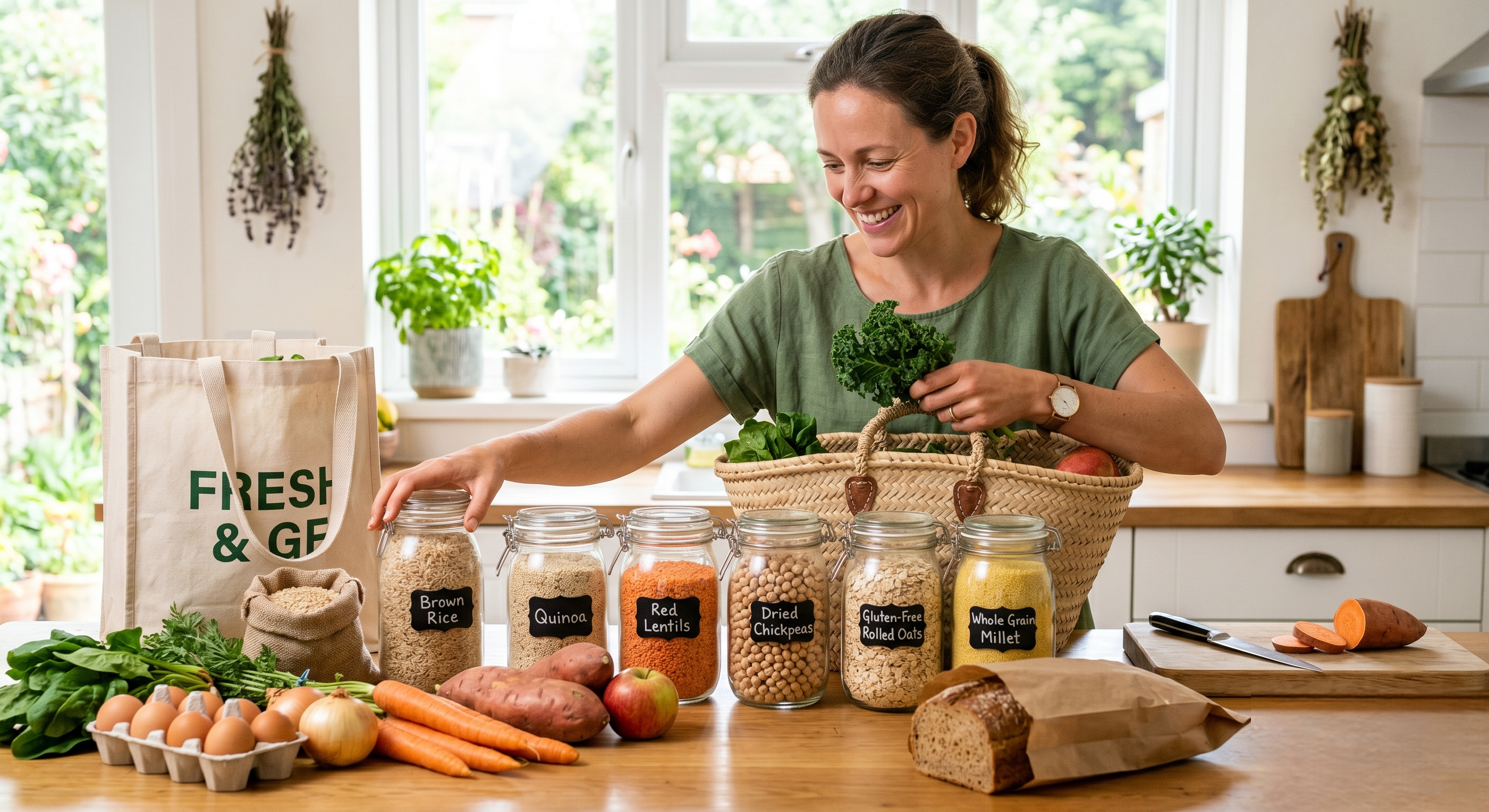
Whole, single-ingredient foods are almost always cheaper per serving than packaged gluten-free products, and they sidestep the cross-contamination concerns that come with shared manufacturing lines. The NIDDK (National Institute of Diabetes and Digestive and Kidney Diseases) recommends building meals around foods that are inherently gluten-free: fresh produce, plain meats, eggs, dairy, legumes, and naturally gluten-free grains. These foods don't need a certified label because gluten was never there to begin with.
Affordable Naturally Gluten-Free Foods
- Rice — white, brown, jasmine, basmati. Often under $1 per pound in bulk.
- Dried beans and lentils — protein and fiber for roughly 10 cents per serving.
- Potatoes and sweet potatoes — versatile, filling, and rarely contaminated.
- Eggs — one of the cheapest complete proteins available.
- Frozen vegetables and fruit — nutritionally comparable to fresh, far cheaper, and longer-lasting.
- Plain oats labeled gluten-free — a fraction of the cost of GF cereal.
- Corn tortillas — typically cheaper than wheat tortillas, and naturally safe.
- Whole chicken, ground turkey, canned tuna and salmon — affordable per-gram protein.
Oats deserve a quick note. Pure oats are gluten-free, but cross-contamination during growing and milling is common. The Mayo Clinic advises that people with celiac disease should only eat oats specifically labeled "gluten-free," which guarantees they were grown, harvested, and processed separately from wheat, barley, and rye. Certified gluten-free oats cost more than standard oats but still far less than any boxed gluten-free cereal — making them one of the best value-per-calorie purchases on the shelf.
Where to Shop: The Pricing Hierarchy Most People Miss
Not all stores price gluten-free items the same way, and the gap between the cheapest and most expensive source for the same product can exceed 200%. Costco, Aldi, Trader Joe's, and Walmart have all expanded their private-label gluten-free lines significantly over the past five years, and these in-house brands are typically priced 30–60% below the name-brand equivalents at conventional supermarkets. Aldi's liveGfree line and Trader Joe's gluten-free offerings are routinely highlighted by celiac advocacy groups as solid value picks. Online subscription services like Thrive Market and Amazon Subscribe & Save can also undercut grocery prices on shelf-stable items if you can commit to volume.
One often-overlooked strategy: shop the international aisle and ethnic grocery stores. Asian markets sell rice noodles, rice paper, and tapioca starch at a fraction of what mainstream stores charge for the same products marketed as "gluten-free." Latin American markets are excellent sources of corn tortillas, masa harina, plantains, beans, and dried chiles. Indian grocers carry chickpea flour (besan), lentil flours, and rice varieties at bulk-store prices. None of these foods are marketed as gluten-free, but they are — and they're priced like ordinary pantry staples because they aren't paying the celiac tax.
Smart Shopping Tactics That Actually Move the Needle
Reading labels remains essential. A 2020 study indexed in PubMed (PMID: 32726632) found that hidden gluten exposure in supposedly gluten-free shoppers most often came from sauces, soups, processed meats, and seasoning blends — items where wheat is used as a thickener or filler. Buying single-ingredient versions of these products (plain tomato paste instead of pasta sauce, plain chicken breast instead of marinated, individual spices instead of blends) is both cheaper and safer. The fewer ingredients on the label, the lower the risk and usually the lower the price.
Practical Money-Saving Habits
- Plan meals around what's on sale. Build the week's menu after checking the flyer, not before.
- Cook in batches and freeze. Gluten-free bread freezes beautifully and stales fast at room temperature.
- Make your own flour blends. Pre-mixed gluten-free flour is up to 4× the price of buying rice flour, tapioca starch, and xanthan gum separately.
- Skip the gluten-free cookies, snack bars, and pretzels. These are the highest-margin products in the category and offer the worst nutritional return.
- Buy in bulk only what you'll actually use within 3 months. Gluten-free flours can go rancid faster than wheat flour due to higher fat content in alternative grains.
Cooking from scratch is the single biggest lever. The cost of a homemade lentil-and-rice bowl is under $1.50 per serving; the equivalent frozen gluten-free meal averages $7. If cooking feels intimidating, you can explore gluten-free recipes at GF Cooking — the recipes there are designed around naturally gluten-free pantry staples rather than expensive specialty products, which is exactly the cost structure you want.
Don't Forget the Tax Deduction
In the United States, the IRS allows people with a documented medical diagnosis of celiac disease to deduct the difference in cost between gluten-free products and their gluten-containing equivalents as a medical expense, provided total medical expenses exceed 7.5% of adjusted gross income. You'll need a doctor's letter confirming the diagnosis and detailed receipts. The Celiac Disease Foundation publishes a current guide to documenting these deductions. For families spending several thousand dollars a year on specialty foods, the savings at tax time can be meaningful.
Key Takeaways
- Build meals around naturally gluten-free whole foods — rice, beans, eggs, produce, and plain meats — rather than packaged gluten-free substitutes.
- Shop strategically: private-label lines at Aldi, Costco, and Trader Joe's, plus international and ethnic markets, dramatically undercut conventional supermarket pricing.
- Cook from scratch when possible — homemade meals using basic GF staples cost roughly one-fifth of frozen GF convenience foods.
- Verify oats and processed items are certified gluten-free to avoid cross-contamination, per Mayo Clinic and Celiac Disease Foundation guidance.
- Track receipts — the price difference between GF and conventional products may be tax-deductible as a medical expense for diagnosed celiacs in the U.S.


Comments
Post a Comment