Gluten-Free Oats: Safe or Not? What Celiac Organizations Say
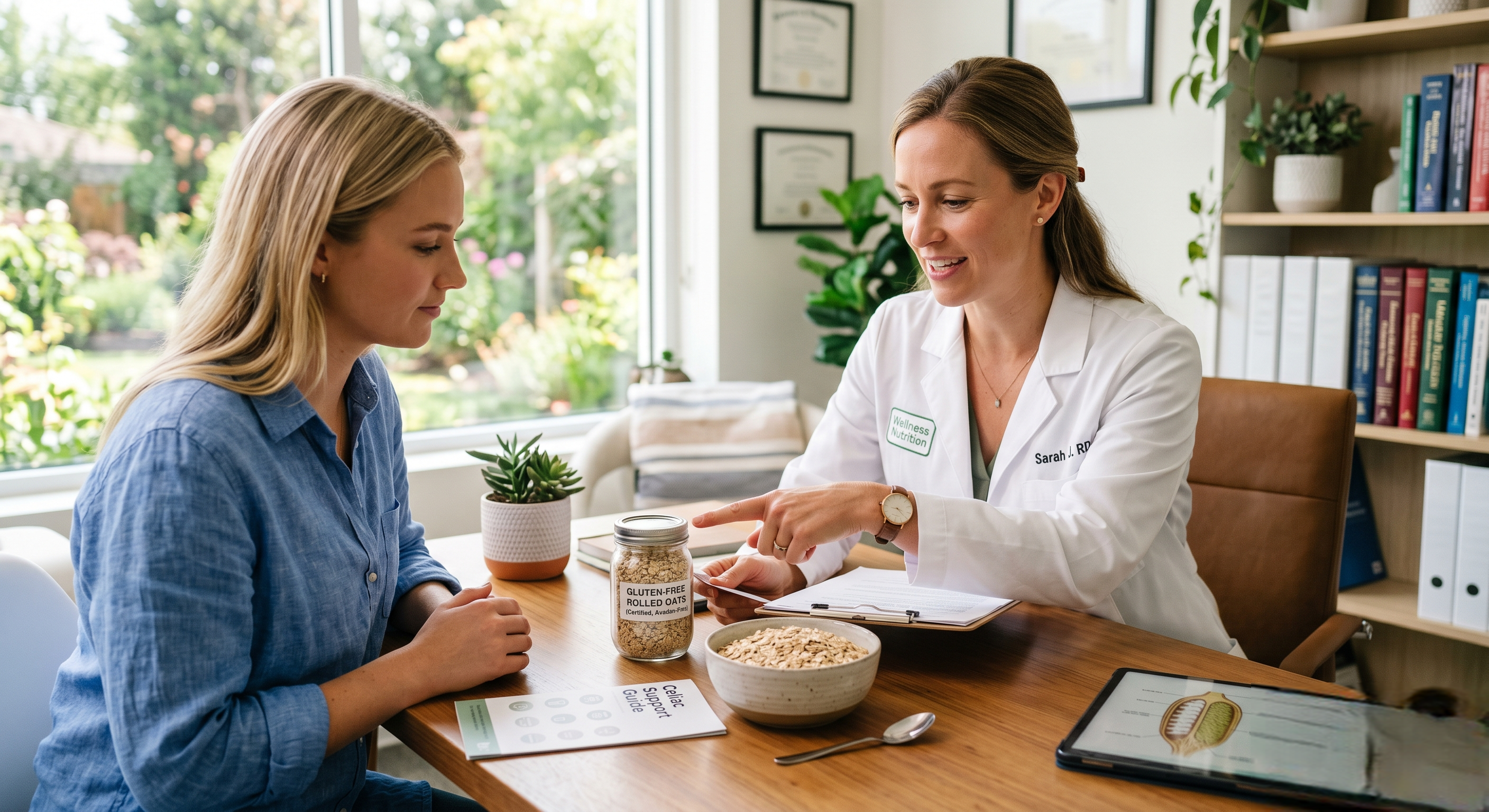
If you've been recently diagnosed with celiac disease or have lived with it for years, you've probably encountered conflicting advice about oats. Are they safe? Should you avoid them entirely? The answer is more nuanced than a simple yes or no, and understanding the science can help you make confident decisions about your diet. Major celiac organizations have weighed in on this issue, and their guidance offers a practical framework for including (or excluding) oats in a gluten-free lifestyle.
Are Oats Naturally Gluten-Free?
Pure, uncontaminated oats do not contain gluten in the traditional sense. The protein in oats is called avenin, which is structurally different from the gliadin found in wheat, the secalin in rye, and the hordein in barley. According to the Celiac Disease Foundation (celiac.org), the vast majority of people with celiac disease can tolerate moderate amounts of pure, uncontaminated oats without triggering an immune response. This represents a significant shift from older medical advice that recommended complete oat avoidance, and it reflects decades of research into how avenin behaves in the celiac gut.
The challenge isn't really the oats themselves — it's contamination. Conventional oats are routinely grown in fields adjacent to wheat, harvested with shared equipment, transported in shared trucks, and processed in facilities that also handle wheat, barley, and rye. The Mayo Clinic notes that this cross-contact is so widespread that standard commercial oats often contain gluten levels well above the 20 parts per million threshold that defines a gluten-free product under FDA labeling rules. This is why "gluten-free oats" exist as a separate, certified category.
What the Major Celiac Organizations Say
Celiac Disease Foundation
The Celiac Disease Foundation states that gluten-free oats are generally safe for most people with celiac disease, recommending a daily limit of approximately ½ cup of dry rolled oats for adults and ¼ cup for children. They emphasize that oats must be specifically labeled gluten-free or certified gluten-free, ideally produced through "purity protocol" methods where oats are grown, harvested, and processed in dedicated gluten-free supply chains.
National Institute of Diabetes and Digestive and Kidney Diseases (NIDDK)
The NIDDK, part of the National Institutes of Health, acknowledges that pure oats are typically tolerated but advises patients to introduce them carefully and under the guidance of a healthcare provider. They specifically caution that a small subset of people with celiac disease react to avenin itself, even when the oats are completely uncontaminated.
Beyond Celiac and the Canadian Celiac Association
Both organizations support the inclusion of certified gluten-free oats in the diet but recommend a slow, monitored introduction — typically starting with small servings and watching for symptoms or follow-up antibody testing if symptoms appear.
The Science Behind Avenin Sensitivity
Research published in PubMed-indexed journals, including a frequently cited study in the American Journal of Clinical Nutrition, suggests that roughly 5% to 8% of people with celiac disease have a measurable immune response to avenin. For these individuals, even pure, certified gluten-free oats can trigger intestinal damage similar to what gluten causes. This is why personalized monitoring matters — population-level guidance won't catch the minority who genuinely react. If you experience symptoms after introducing certified oats, it's worth working with your gastroenterologist to repeat antibody testing (tTG-IgA) and possibly a follow-up endoscopy to check whether your villi are still healing properly.
The good news is that for the 92–95% of people with celiac disease who tolerate oats well, the nutritional payoff is substantial. Oats are an excellent source of beta-glucan soluble fiber, which has been shown to support cardiovascular health, improve insulin sensitivity, and feed beneficial gut bacteria. They also provide manganese, phosphorus, magnesium, iron, zinc, and B vitamins — nutrients that are often deficient in restrictive gluten-free diets that rely heavily on refined rice flour and corn starch. Adding oats back can meaningfully improve the nutritional density of your meals.
How to Choose Safe Oats
Not all "gluten-free" oats are produced the same way, and understanding the distinction helps you shop with confidence. There are two main production methods on the market today:
- Purity protocol oats: Grown in dedicated fields, harvested with dedicated equipment, and processed in gluten-free-only facilities. Brands like GF Harvest, Montana Gluten Free, and Avena Foods follow this method.
- Mechanically/optically sorted oats: Conventional oats that have been sorted using machines that detect and remove wheat, barley, and rye kernels. Most major brands like Quaker Gluten Free and Bob's Red Mill use this approach. Studies have shown sorting can be effective but is generally considered less foolproof than the purity protocol.
Both approaches can produce oats that meet the FDA's 20 ppm threshold, but if you're newly diagnosed, still healing, or particularly sensitive, purity protocol oats are the safer starting point. Always look for third-party certification logos like GFCO (Gluten-Free Certification Organization), which tests at a stricter 10 ppm threshold. If you want recipe inspiration once you've found a brand that works for you, you can explore gluten-free recipes at GF Cooking for ideas on incorporating oats into breakfast bowls, baked goods, and savory dishes.
Practical Tips for Introducing Oats
If your celiac disease is well-controlled — meaning your antibody levels are normal and you've been symptom-free on a strict gluten-free diet for at least six months — you're in a good position to try oats. Start with a small amount, perhaps 2 tablespoons of dry oats per day for the first week, and gradually increase to the recommended ½ cup serving over the course of several weeks. Pay close attention to digestive symptoms, fatigue, brain fog, skin reactions, or joint pain, which can all be signs of an immune response. Keeping a simple food and symptom journal during this introduction period makes patterns much easier to spot.
It's also wise to schedule a follow-up with your healthcare provider three to six months after introducing oats regularly. A repeat tTG-IgA antibody test will reveal whether your immune system is reacting silently, even if you feel fine. Remember that some intestinal damage in celiac disease can occur without obvious symptoms — this is why objective testing matters more than relying on how you feel. For more practical meal ideas that incorporate certified oats safely, you can find seasonal recipes and ingredient guides at GF Cooking.
Key Takeaways
- Pure, certified gluten-free oats are safe for most people with celiac disease — major organizations including the Celiac Disease Foundation and NIDDK endorse their inclusion in moderate amounts.
- Cross-contamination is the real risk, not the oats themselves. Always choose products labeled "gluten-free" with third-party certification like GFCO.
- About 5–8% of people with celiac disease react to avenin, the protein in oats. Introduce oats slowly and monitor symptoms or antibody levels.
- Stick to recommended portions: ½ cup dry oats per day for adults, ¼ cup for children, and only after celiac disease is well-controlled.
- Purity protocol oats offer the highest level of safety, while mechanically sorted oats are widely available and generally meet labeling standards — choose based on your sensitivity level.


Comments
Post a Comment