Gluten-Free Mediterranean Diet: A Natural Fit for Celiac
Why the Mediterranean Diet Is Tailor-Made for Celiac Disease
If you've been navigating life with celiac disease or non-celiac gluten sensitivity, you already know that finding an eating pattern that's both medically safe and genuinely enjoyable can feel like solving a puzzle. The Mediterranean diet — rooted in the traditional cuisines of Greece, southern Italy, and coastal Spain — happens to fit that puzzle remarkably well. Built around vegetables, legumes, fish, olive oil, fruit, and nuts, it leans heavily on naturally gluten-free whole foods rather than processed wheat-based staples. For those of us managing an autoimmune condition that demands lifelong vigilance, that's not just convenient; it's clinically meaningful.
Researchers have spent decades documenting the Mediterranean diet's benefits for cardiovascular health, cognitive function, and longevity. The Mayo Clinic notes that this eating pattern is consistently associated with reduced risk of heart disease, type 2 diabetes, and certain cancers. What makes it especially relevant for the celiac community is that nearly every signature ingredient — wild-caught fish, leafy greens, lentils, tomatoes, extra-virgin olive oil — is inherently free of gluten. There's no awkward substitution required, no hunting for specialty flours, and no compromise on flavor. You're simply eating the way coastal Mediterranean families have eaten for centuries.
The Celiac-Mediterranean Connection: What the Science Says
People newly diagnosed with celiac disease often discover that a strict gluten-free diet, while essential, isn't automatically a healthy diet. The Celiac Disease Foundation (celiac.org) has repeatedly cautioned that many commercial gluten-free products are higher in sugar, fat, and refined starches than their wheat-based counterparts, and lower in fiber, B vitamins, iron, and magnesium. A 2019 review published on PubMed found that long-term adherents of a typical packaged gluten-free diet showed measurable nutritional deficiencies and elevated cardiovascular risk markers compared to the general population. The Mediterranean approach directly counteracts these gaps because it emphasizes whole, fiber-rich, micronutrient-dense foods rather than refined replacements.
There's also growing evidence that the anti-inflammatory profile of the Mediterranean diet may support intestinal healing in people with celiac disease. The National Institute of Diabetes and Digestive and Kidney Diseases (NIDDK) emphasizes that mucosal recovery after diagnosis can take months to years, and that nutrient repletion plays a central role. Olive oil's polyphenols, the omega-3 fatty acids in oily fish like sardines and mackerel, and the prebiotic fibers in chickpeas and artichokes all contribute to gut barrier function and a healthier microbiome. A 2021 PubMed-indexed study from Italian gastroenterologists specifically examined celiac patients following a gluten-free Mediterranean diet and reported improved lipid profiles, better glycemic control, and higher reported quality of life compared to those on a conventional gluten-free diet.
Building Your Gluten-Free Mediterranean Plate
Translating these principles into daily meals is more straightforward than it sounds. The traditional Mediterranean plate is roughly half vegetables and fruit, a quarter lean protein (preferably fish or legumes), and a quarter naturally gluten-free whole grains such as quinoa, brown rice, millet, buckwheat, or certified gluten-free oats. Extra-virgin olive oil replaces butter as the primary fat, and herbs like oregano, rosemary, basil, and parsley do most of the seasoning work. Wheat couscous, bulgur, farro, and traditional pasta are off-limits, but they're easily swapped for chickpea pasta, brown rice, or polenta without losing the spirit of the cuisine.
Foods to Embrace
- Vegetables: tomatoes, eggplant, zucchini, peppers, leafy greens, artichokes, fennel
- Fruits: figs, citrus, grapes, pomegranate, stone fruits, berries
- Proteins: sardines, salmon, anchovies, mackerel, octopus, eggs, modest portions of poultry
- Legumes: chickpeas, lentils, white beans, fava beans
- Healthy fats: extra-virgin olive oil, olives, almonds, walnuts, pistachios
- Gluten-free grains: quinoa, brown rice, millet, buckwheat, certified gluten-free oats, polenta
- Dairy (in moderation): Greek yogurt, feta, ricotta, pecorino — verify gluten-free certification on processed cheeses
Foods and Pitfalls to Avoid
- Traditional pasta, couscous, bulgur, farro, semolina, and freekeh — all contain wheat
- Pita bread, focaccia, and most Mediterranean breads unless explicitly gluten-free
- Soy sauce in marinades (use tamari instead)
- Imitation crab and surimi often used in seafood salads
- Pre-mixed spice blends and bouillon cubes that may contain wheat-based fillers
- Beer-battered or breaded seafood — request grilled or pan-seared instead
Cross-Contamination: The Hidden Hurdle
Even when every ingredient on your plate is naturally gluten-free, cross-contamination remains the single biggest day-to-day risk for people with celiac disease. The Celiac Disease Foundation recommends maintaining a dedicated toaster, separate cutting boards, and color-coded utensils when cooking in a shared kitchen. When dining at Mediterranean restaurants, ask whether grilled fish is prepared on the same surface as breaded items, whether fries are cooked in shared oil with battered foods, and whether marinades contain soy sauce or wheat-based thickeners. A few polite questions upfront can prevent days of post-exposure symptoms. For inspiration on safe, kitchen-tested recipes, you can explore gluten-free recipes at GF Cooking (https://gfcooking.food), which curates Mediterranean-style dishes specifically developed with celiac safety in mind.
A Sample Day on the Gluten-Free Mediterranean Diet
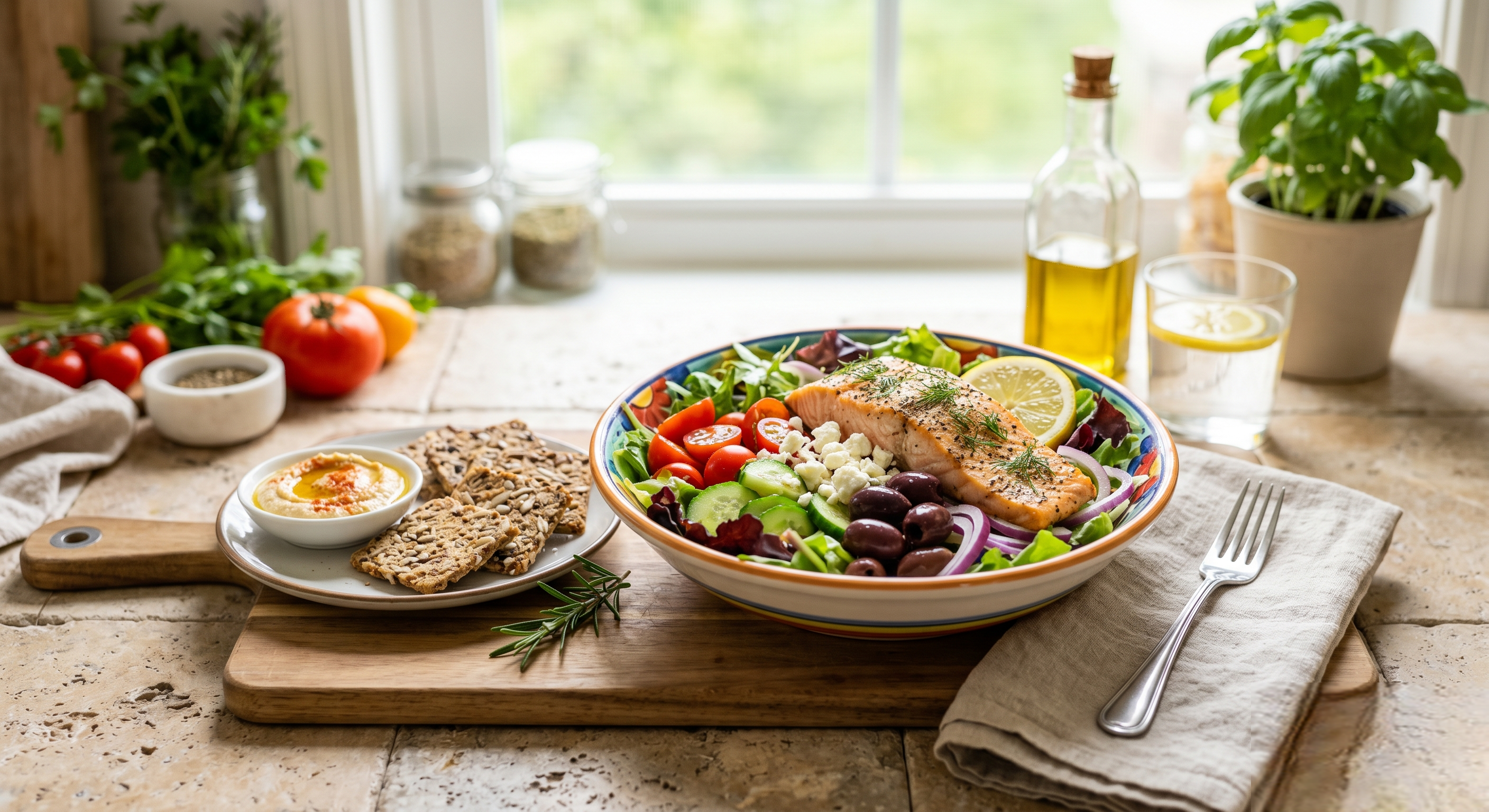
To make this tangible, picture a typical day of eating: breakfast might be Greek yogurt topped with fresh berries, a drizzle of honey, and a handful of toasted certified gluten-free oats and walnuts. Lunch could be a generous Greek salad with cucumbers, tomatoes, red onion, kalamata olives, feta, and grilled chicken, dressed with olive oil and lemon. An afternoon snack might be hummus with carrot and cucumber sticks, or a small handful of almonds with an orange. Dinner could feature pan-seared salmon over a bed of lemony quinoa, alongside roasted zucchini, bell peppers, and eggplant tossed with garlic and oregano. Dessert? Fresh figs with a small piece of pecorino, or a square of dark chocolate with espresso. None of it requires specialty gluten-free packaging, and all of it aligns with what cardiologists, gastroenterologists, and celiac specialists recommend.
Making the Transition Sustainable
The hardest part of any dietary shift isn't the first week — it's month six, when novelty wears off and old habits whisper. Sustainability comes from variety, batch cooking, and building a small repertoire of dishes you genuinely look forward to. Start by replacing one wheat-based meal a week with a Mediterranean alternative, then expand from there. Stock your pantry with the basics — good olive oil, canned chickpeas and lentils, jarred artichokes, tinned sardines, quinoa, and a generous spice rack — so that a wholesome meal is always 20 minutes away. If you're looking for fresh weeknight ideas, you'll find dozens of celiac-safe Mediterranean dishes at GF Cooking that take the guesswork out of meal planning.
Key Takeaways
- Naturally aligned: The Mediterranean diet is built around whole foods that are inherently gluten-free, eliminating the need for processed substitutes.
- Nutritionally superior: Research indexed on PubMed shows celiac patients on a gluten-free Mediterranean diet have better lipid profiles, glycemic control, and quality of life than those on conventional gluten-free diets.
- Supports gut healing: Anti-inflammatory fats, polyphenols, and prebiotic fibers may aid the mucosal recovery emphasized by the NIDDK after celiac diagnosis.
- Stay vigilant about cross-contamination: Even naturally gluten-free Mediterranean meals require safe preparation surfaces, dedicated tools, and informed restaurant ordering.
- Start small and stock smart: A well-stocked pantry of olive oil, legumes, gluten-free grains, herbs, and tinned fish makes celiac-safe Mediterranean eating sustainable for the long haul.


Comments
Post a Comment