Gluten-Free Meal Planning: 7-Day Family-Friendly Menu
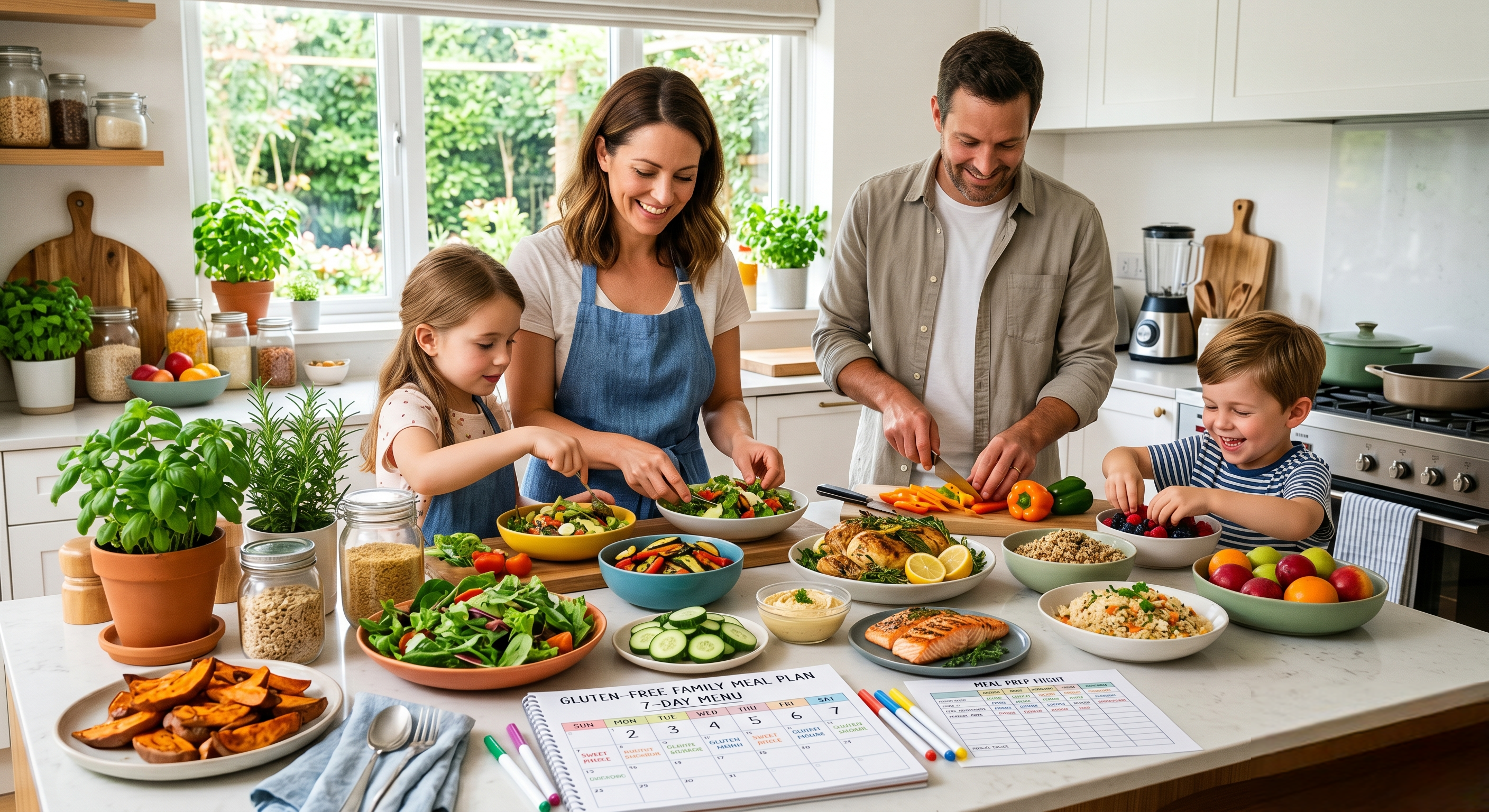
Planning a week of gluten-free meals for a family can feel like a high-stakes puzzle: every ingredient label demands scrutiny, every shared kitchen surface poses a cross-contamination risk, and every picky eater deserves food they actually want to eat. The good news is that a structured 7-day menu solves most of these problems before they start. According to the Celiac Disease Foundation (celiac.org), strict adherence to a gluten-free diet is currently the only accepted treatment for celiac disease, and meal planning is one of the most reliable ways to maintain that adherence without burning out. This guide walks through a family-friendly week of meals built around naturally gluten-free whole foods, with science-backed reasoning and shopping shortcuts woven in.
Why Meal Planning Matters for Gluten-Free Families
Research published through the National Institute of Diabetes and Digestive and Kidney Diseases (NIDDK) confirms that even small amounts of gluten — as little as 50 milligrams per day, roughly the equivalent of an eighth of a slice of bread — can trigger intestinal damage in people with celiac disease. That kind of precision is hard to maintain when meals are improvised at 6 p.m. with a hungry family circling the kitchen. A planned week reduces decision fatigue, shrinks your grocery bill, and dramatically lowers the odds of an accidental gluten exposure from a hastily grabbed convenience food.
Mayo Clinic clinicians also note that families managing celiac disease frequently report higher meal-related stress than those managing other dietary conditions, largely because of label vigilance and social pressure. A written menu offsets this by turning each shopping trip into a focused mission rather than an open-ended scavenger hunt. It also gives non-celiac family members predictability — kids especially tend to eat better when they know what is coming and have helped choose it.
Building the Foundation: Naturally Gluten-Free Staples
The strongest gluten-free menus lean on foods that have never contained gluten in the first place: fresh produce, plain meats, fish, eggs, legumes, dairy, nuts, and naturally gluten-free grains like rice, quinoa, buckwheat, and certified gluten-free oats. A 2022 review in the journal Nutrients (indexed in PubMed) found that gluten-free diets built primarily around whole foods — rather than packaged gluten-free substitutes — were associated with better fiber intake, improved micronutrient status, and lower glycemic load. Translation: a menu of real food beats one built around boxed gluten-free crackers and cookies.
Pantry Checklist Before You Start
- Certified gluten-free oats for breakfasts and baking
- Quinoa, brown rice, and rice noodles for grain bowls and stir-fries
- Tamari (gluten-free soy sauce alternative)
- Canned beans, lentils, and tomatoes labeled gluten-free
- A trusted gluten-free flour blend for pancakes, sauces, and breading
The 7-Day Family-Friendly Menu
The menu below balances make-ahead breakfasts, kid-approved lunches, and dinners that scale up for leftovers. Every recipe is designed to be naturally gluten-free, with familiar flavors that won't make children feel like they are eating a "special diet." For dozens of fully tested recipes that fit this framework, you can explore gluten-free recipes at GF Cooking, where each dish includes step-by-step cross-contamination notes.
Monday
- Breakfast: Overnight oats with berries, chia seeds, and almond butter
- Lunch: Rotisserie chicken wraps in corn tortillas with avocado and shredded carrots
- Dinner: Sheet-pan lemon-herb salmon with roasted potatoes and green beans
Tuesday
- Breakfast: Scrambled eggs with cheddar on rice cakes
- Lunch: Leftover salmon flaked into rice bowls with cucumber and tamari
- Dinner: Beef and vegetable stir-fry over rice noodles
Wednesday
- Breakfast: Banana-oat blender pancakes with maple syrup
- Lunch: Hummus and veggie plates with gluten-free seed crackers
- Dinner: Slow-cooker chicken tortilla soup (corn tortillas only)
Thursday
- Breakfast: Greek yogurt parfaits with certified GF granola
- Lunch: Leftover tortilla soup with cheese and avocado
- Dinner: Turkey meatballs over zucchini noodles with marinara
Friday
- Breakfast: Smoothie bowls with frozen berries, spinach, and GF protein powder
- Lunch: Quinoa salad with roasted chickpeas, feta, and lemon vinaigrette
- Dinner: Family taco night with seasoned ground beef, corn tortillas, and salsa bar
Saturday
- Breakfast: Crustless veggie quiche made ahead Friday night
- Lunch: Loaded baked potatoes with broccoli, cheddar, and bacon
- Dinner: Homemade gluten-free pizza on a cauliflower or rice-flour crust
Sunday
- Breakfast: Bacon, eggs, and roasted sweet potato hash
- Lunch: Leftover pizza reheated with a side salad
- Dinner: Roast chicken with mashed potatoes, gravy thickened with cornstarch, and steamed carrots
Smart Strategies to Make the Week Easier
Batch cooking is the quiet hero of a sustainable gluten-free week. Spending 60 to 90 minutes on Sunday afternoon to roast a sheet pan of vegetables, cook a pot of rice, hard-boil eggs, and portion snacks pays back hours during the work week. Mayo Clinic dietitians often recommend this "cook once, eat twice" approach for households managing chronic dietary needs because it reduces the temptation to grab risky last-minute options. Pair batch cooking with a labeled, dedicated gluten-free shelf in your pantry so visiting relatives and tired adults never have to guess which jar of oats is safe.
Cross-contamination is the other invisible variable, and it deserves equal attention to ingredient labels. The Celiac Disease Foundation recommends maintaining a separate toaster, dedicated wooden utensils and cutting boards, and a clearly marked condiment shelf where double-dipping with a crumb-laden knife cannot happen. In mixed households where some family members still eat gluten, color-coding utensils — for example, all red items are gluten-free only — turns a vigilant ritual into an automatic habit even children can follow. For more deep dives into safe technique and recipe testing, you can browse the resources at GF Cooking.
Nutrient Considerations Worth Watching
Several PubMed-indexed studies have flagged that gluten-free diets, when not carefully planned, can fall short on fiber, iron, folate, calcium, vitamin D, and B vitamins — nutrients normally fortified into wheat-based products. The menu above mitigates these gaps by including legumes, leafy greens, dairy, eggs, fortified gluten-free grains, and oily fish. If a family member has been recently diagnosed with celiac disease, the NIDDK recommends working with a registered dietitian for the first 6 to 12 months to confirm nutrient status through blood work and adjust the menu as the small intestine heals. This is especially important for growing children, whose calorie and micronutrient needs change rapidly.
Key Takeaways
- Plan, then shop: A written 7-day menu reduces gluten-exposure risk and trims your grocery bill simultaneously.
- Build on whole foods: Naturally gluten-free staples deliver better nutrition than packaged GF substitutes, per peer-reviewed research.
- Batch on Sunday: 60–90 minutes of prep makes the rest of the week dramatically smoother for working families.
- Prevent cross-contamination: Dedicated utensils, a labeled pantry shelf, and a separate toaster are non-negotiable in mixed households.
- Mind the micronutrients: Watch fiber, iron, folate, calcium, and vitamin D, and consider a dietitian consult after a new celiac diagnosis.


Comments
Post a Comment