Dermatitis Herpetiformis: The Skin Condition Caused by Gluten
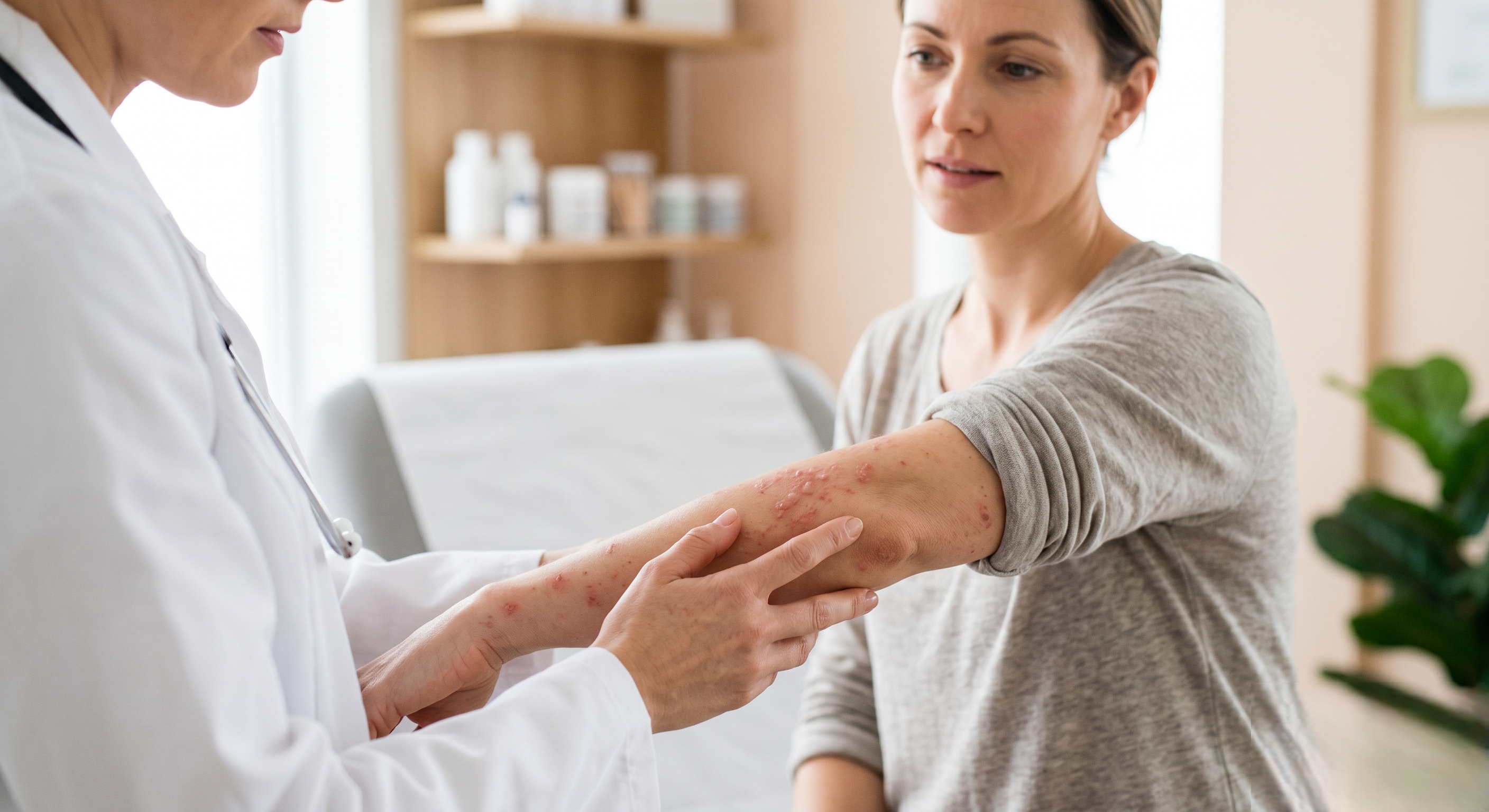
If you've ever battled an intensely itchy rash that no cream seems to fix, gluten may be the unexpected culprit. Dermatitis herpetiformis (DH) is a chronic, blistering skin condition that affects roughly 10 to 15 percent of people with celiac disease, according to the Celiac Disease Foundation. Often called "celiac disease of the skin," DH is far more than a cosmetic nuisance — it is the visible signal of an autoimmune reaction happening deep inside the body. Understanding what triggers it, how it's diagnosed, and how to manage it can dramatically improve quality of life for the people living with it.
What Is Dermatitis Herpetiformis?
Dermatitis herpetiformis is an autoimmune skin disorder triggered by the ingestion of gluten — the protein found in wheat, barley, and rye. Despite the name, it has nothing to do with the herpes virus; the term "herpetiformis" simply refers to the herpes-like clustering pattern of the blisters. The condition was first described by dermatologist Louis Duhring in 1884, and it is sometimes still called Duhring's disease. According to the National Institute of Diabetes and Digestive and Kidney Diseases (NIDDK), nearly everyone with DH also has some degree of gluten-sensitive enteropathy, even when they have no obvious digestive symptoms.
The rash itself has very recognizable features once you know what to look for. It tends to appear symmetrically — meaning it shows up on both sides of the body in mirror-image fashion — and it favors the elbows, knees, buttocks, scalp, and lower back. The lesions are small, fluid-filled blisters (vesicles) that sit on top of red, raised patches of skin. The hallmark symptom, however, is the burning, stinging itch that often precedes the visible rash by hours. Many patients describe the sensation as so intense that they scratch the blisters away before they ever fully form, leaving behind crusts, erosions, and eventual hyperpigmentation.
Who Develops DH?
DH most commonly appears in adults between the ages of 30 and 40, though it can develop at any age. Unlike classic celiac disease, which is slightly more common in women, DH is more frequently diagnosed in men, with a male-to-female ratio of about 2:1. People of Northern European descent are at higher risk, and there is a strong genetic component — most patients carry the HLA-DQ2 or HLA-DQ8 genes, the same markers associated with celiac disease. Having a first-degree relative with celiac disease or DH significantly raises your risk of developing either condition.
The Science: How Gluten Triggers the Rash
The mechanism behind DH is fascinating and a bit unusual. When someone with the genetic predisposition consumes gluten, their immune system produces antibodies called immunoglobulin A (IgA) against an enzyme in the gut called tissue transglutaminase (tTG). In DH patients, these antibodies cross-react with a similar enzyme in the skin called epidermal transglutaminase (eTG). The IgA-eTG complexes then deposit in the dermal papillae — the tiny finger-like projections just beneath the surface of the skin — where they trigger inflammation, neutrophil recruitment, and the characteristic blistering. A 2021 review published in the Journal of the American Academy of Dermatology (PubMed) emphasizes that this granular IgA deposition is the diagnostic gold standard for DH and distinguishes it from every other blistering skin disease.
Getting an Accurate Diagnosis
Because DH can mimic eczema, scabies, contact dermatitis, and even bug bites, misdiagnosis is unfortunately common. The Mayo Clinic recommends that anyone suspected of having DH undergo a skin biopsy taken from healthy-looking skin immediately adjacent to a fresh lesion — not from the lesion itself, since the inflammation can destroy the diagnostic IgA deposits. The biopsy is then examined using direct immunofluorescence, which reveals the granular IgA pattern that confirms the diagnosis. Blood tests for anti-tissue transglutaminase (tTG-IgA) and anti-endomysial (EMA) antibodies are also valuable, though they can be negative in some DH patients with mild intestinal involvement.
It is critical that patients continue eating gluten until all diagnostic tests are completed. Going gluten-free before testing can produce false-negative results, leaving patients without a clear diagnosis and forcing them to undergo a difficult gluten challenge later. If your dermatologist or primary care provider is unfamiliar with DH, ask for a referral to a dermatologist who specializes in autoimmune skin diseases or to a gastroenterologist with celiac expertise.
Treatment: The Two-Pronged Approach
The cornerstone of long-term DH management is a strict, lifelong gluten-free diet. Even tiny amounts of gluten — crumbs from a shared toaster, a dusting of flour on a restaurant cutting board, or hidden gluten in sauces and seasonings — can trigger a flare days or even weeks later. Most patients see significant skin improvement within several months of going gluten-free, though complete clearance can take one to two years. The good news is that the diet also heals the underlying intestinal damage and reduces the long-term risk of complications such as osteoporosis, anemia, and intestinal lymphoma.
For rapid symptom relief while the diet takes effect, dermatologists often prescribe dapsone, an oral antibiotic that calms the neutrophilic inflammation responsible for the itch and blisters. Dapsone can produce noticeable relief within 24 to 72 hours, but it requires regular blood monitoring because it can cause hemolytic anemia and other side effects. As the gluten-free diet takes hold, most patients are able to gradually taper off dapsone entirely. Building a sustainable, satisfying gluten-free lifestyle is much easier than it used to be — you can explore gluten-free recipes at GF Cooking for inspiration that goes well beyond plain rice and chicken.
Practical Tips for Living with DH
- Audit your kitchen for cross-contamination: dedicated toaster, separate cutting boards, color-coded utensils, and clearly labeled gluten-free condiments make a real difference.
- Read every label, every time: formulations change, and gluten can hide in soy sauce, malt vinegar, oats (unless certified GF), licorice, and many medications.
- Watch iodine intake during flares: high-iodine foods like seaweed, kelp, and iodized salt can worsen DH lesions in some sensitive individuals, though they don't cause the disease itself.
- Treat the itch gently: cool compresses, fragrance-free moisturizers, and short-term topical steroids can ease symptoms while you wait for the diet to work.
- Connect with a dietitian: a registered dietitian experienced in celiac disease can help you avoid hidden gluten and ensure nutritional adequacy. For meal ideas, browse trusted resources like GF Cooking.
What Recovery Really Looks Like
Healing from DH is rarely linear. Even patients who follow the diet meticulously may experience occasional flares, particularly after accidental gluten exposure at restaurants or social events. Skin lesions tend to come and go in waves, and post-inflammatory hyperpigmentation — the brown or grayish marks left behind after lesions heal — can persist for months. Patience is essential. Tracking flares in a simple food and symptom journal can help you identify hidden gluten sources and reassure you that progress is being made, even when the mirror suggests otherwise.
Key Takeaways
- DH is celiac disease on the skin: it is triggered by gluten and almost always accompanied by some intestinal damage, even without digestive symptoms.
- Diagnosis requires a skin biopsy from healthy skin near a lesion, examined with direct immunofluorescence — and you must keep eating gluten until testing is complete.
- A strict, lifelong gluten-free diet is the only cure; dapsone offers fast symptom relief while the diet takes effect over months to years.
- Cross-contamination matters: tiny gluten exposures can trigger flares, so kitchen hygiene and label-reading are non-negotiable.
- Long-term outlook is excellent: with consistent dietary management, most patients achieve full skin clearance and reduce their risk of celiac-related complications.


Comments
Post a Comment