Cross-Contamination Guide for People with Celiac Disease
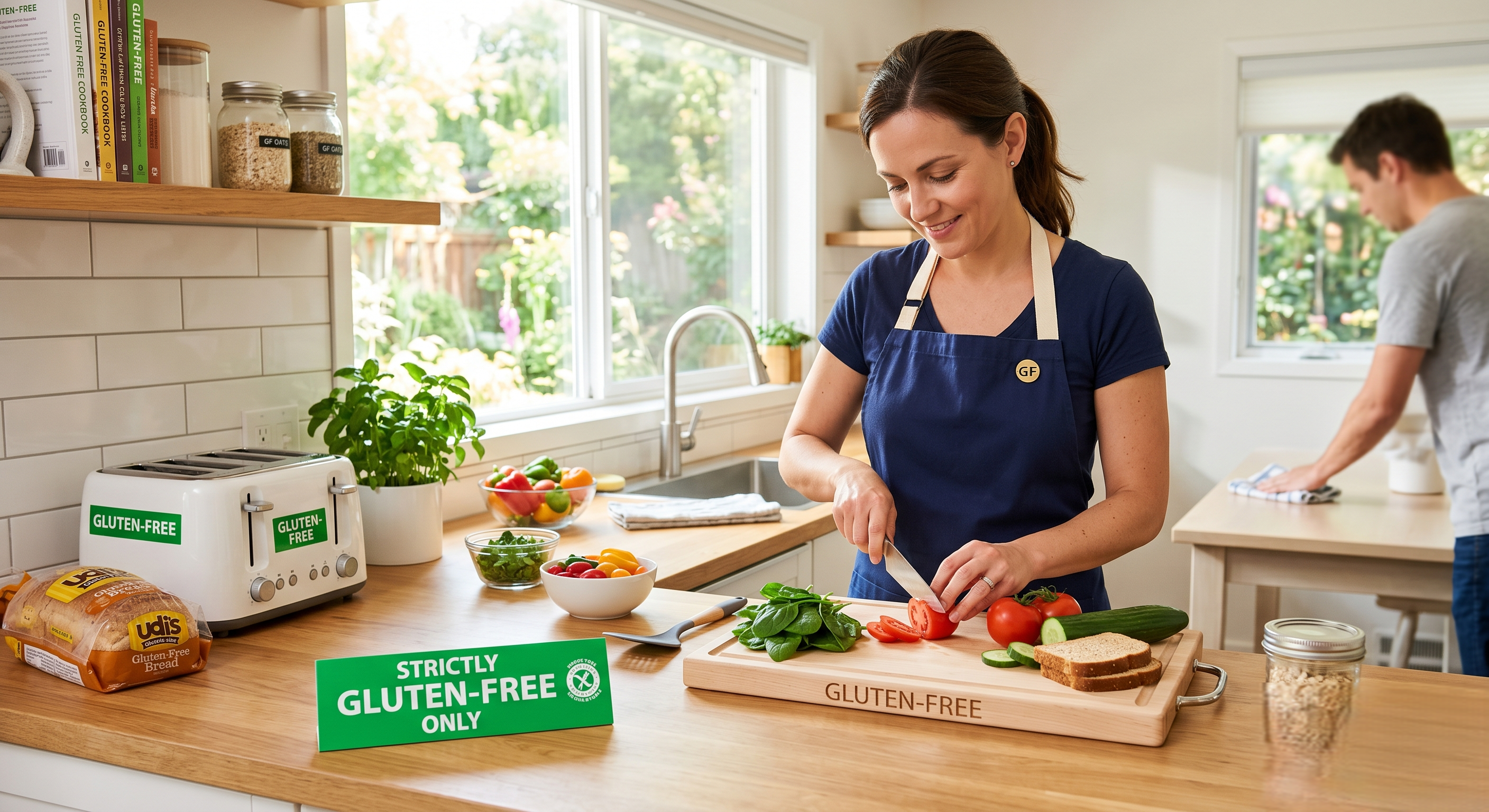
For someone living with celiac disease, gluten isn't just an ingredient to avoid — it's a substance that can trigger an autoimmune reaction from amounts as small as 20 parts per million. According to the Celiac Disease Foundation (celiac.org), as little as 1/64th of a teaspoon of flour, or roughly 20 milligrams of gluten, is enough to cause intestinal damage in people with celiac disease. That's why cross-contamination — the unintentional transfer of gluten from one surface, utensil, or food to another — is one of the most underestimated threats to a gluten-free lifestyle. Understanding where it hides, how it spreads, and how to prevent it is essential for protecting your long-term health.
What Cross-Contamination Really Means for Celiacs
Cross-contamination, sometimes called "cross-contact" by celiac advocacy groups, occurs when a gluten-free food touches gluten-containing food, surfaces, or utensils. Unlike a food allergy, where reactions can be immediate and dramatic, the damage from gluten exposure in celiac disease often happens silently inside the small intestine. A 2018 study published in The American Journal of Clinical Nutrition (PubMed ID: 30289437) found that even people who believed they were strictly adhering to a gluten-free diet were unknowingly consuming significant amounts of gluten, primarily through cross-contamination in shared kitchens and restaurants. This silent exposure helps explain why up to 30% of celiac patients fail to fully heal despite a "gluten-free" diet, according to the Mayo Clinic.
The threshold matters too. The FDA defines "gluten-free" as containing less than 20 parts per million of gluten — a standard endorsed by the National Institute of Diabetes and Digestive and Kidney Diseases (NIDDK). While that sounds like a small allowance, it adds up quickly when contamination is repeated across meals. A few crumbs from a shared toaster, a wooden spoon used in regular pasta water, or a cutting board that prepped sandwich bread can each push your daily intake well above safe levels, even when every individual ingredient on the label says "gluten-free."
The Hidden Hot Spots in Your Kitchen
Shared Appliances and Utensils
Toasters are the most notorious offender. Bread crumbs lodge inside the heating elements and slot interiors, and no amount of shaking can fully remove them. The Celiac Disease Foundation strongly recommends a dedicated gluten-free toaster — or single-use toaster bags as a backup. Other commonly contaminated items include wooden spoons, cutting boards, colanders (gluten residue clings stubbornly to the holes), cast-iron skillets, and non-stick pans where coatings can absorb particles. Stand mixers, blenders, and food processors used for both regular and gluten-free baking should be thoroughly disassembled and washed, or — better — kept separate.
Condiments and Communal Jars
Double-dipping is a quiet kitchen saboteur. A knife that spread peanut butter on regular toast and went back into the jar has now contaminated the entire jar. The same goes for butter, mayonnaise, jam, and cream cheese. Households with mixed eaters should use squeeze bottles where possible, or label dedicated gluten-free jars with a bright sticker. This single change has been shown in multiple celiac patient surveys to reduce accidental glutening episodes significantly. If you're rebuilding your pantry and recipe rotation, you can explore gluten-free recipes at GF Cooking that are designed from the ground up to avoid these risks.
Flour in the Air
Wheat flour can stay airborne for up to 24–48 hours after baking and settle on every surface in a kitchen. If someone in your home bakes with regular flour, the countertops, dish racks, and even open containers nearby can become contaminated. The Celiac Disease Foundation recommends avoiding the kitchen entirely during and immediately after wheat flour use, and wiping down all surfaces with soap and water before preparing your own food.
Eating Out: The Highest-Risk Environment
Restaurants present the greatest cross-contamination risk because you can't see what's happening in the kitchen. A 2019 study in the journal Gastroenterology tested supposedly gluten-free restaurant meals and found that 32% of items labeled gluten-free contained detectable gluten, with pizza and pasta dishes being the worst offenders — likely due to shared ovens and pasta water. Fryers are another major concern: french fries cooked in oil shared with breaded items are not safe, even if the fries themselves are naturally gluten-free.
When dining out, ask specific questions rather than relying on menu labels. The Mayo Clinic suggests asking whether the kitchen has a dedicated prep area, separate utensils, and a manager trained in allergen protocols. Look for restaurants certified by GFFS (Gluten-Free Food Service) or those that work with the Gluten Intolerance Group's GFFS accreditation. When in doubt, choose naturally gluten-free meals — grilled proteins, steamed vegetables, plain rice — and confirm preparation methods directly with the chef, not just the server.
Building a Safer Kitchen at Home
For households where some members eat gluten and others don't, full kitchen separation isn't always realistic — but smart zoning is. Designate a gluten-free shelf in the pantry (top shelf is best, so crumbs can't fall onto your food), use color-coded cutting boards and utensils (red for gluten, green for safe), and store your gluten-free items in sealed containers. Sponges and dishcloths absorb gluten particles, so use fresh ones for gluten-free dishes or run everything through a hot dishwasher cycle, which the NIDDK confirms reliably eliminates gluten residue.
- Replace porous items: wooden cutting boards, scratched non-stick pans, and old wooden spoons should be replaced with new gluten-free-only versions.
- Wash hands frequently: after handling any gluten-containing food, before touching gluten-free items.
- Clean before cooking: wipe counters with soap and water (not just a rinse) before any gluten-free meal prep.
- Read every label, every time: manufacturers reformulate products without notice. "Gluten-free" certification (GFCO logo) is more reliable than self-declared labels.
If you're new to celiac-safe cooking or want vetted, family-friendly meal ideas, you can browse celiac-safe recipes at GF Cooking that take cross-contamination into account at every step. Building a repertoire of trusted recipes makes daily life dramatically easier — and reduces the mental load of constantly evaluating risk.
Key Takeaways
- 20 parts per million is the legal limit for gluten-free labeling, but cross-contamination can push your daily exposure well above safe thresholds even with compliant products.
- Replace porous kitchen tools — wooden boards, scratched pans, old colanders, and toasters — with dedicated gluten-free versions, since gluten clings to surfaces and survives normal cleaning.
- Condiment jars and shared appliances are among the most common sources of accidental glutening at home; use squeeze bottles, labeled jars, and dedicated equipment wherever possible.
- Restaurants carry real risk: ask specific questions about prep areas, fryers, and pasta water, and prefer establishments with GFFS certification or robust allergen training.
- Healing depends on vigilance: research suggests up to 30% of celiac patients don't fully heal because of ongoing low-level cross-contamination — small habits compound into long-term outcomes.

Comments
Post a Comment