Certified Gluten-Free vs Gluten-Free Labeling: What the Labels Mean
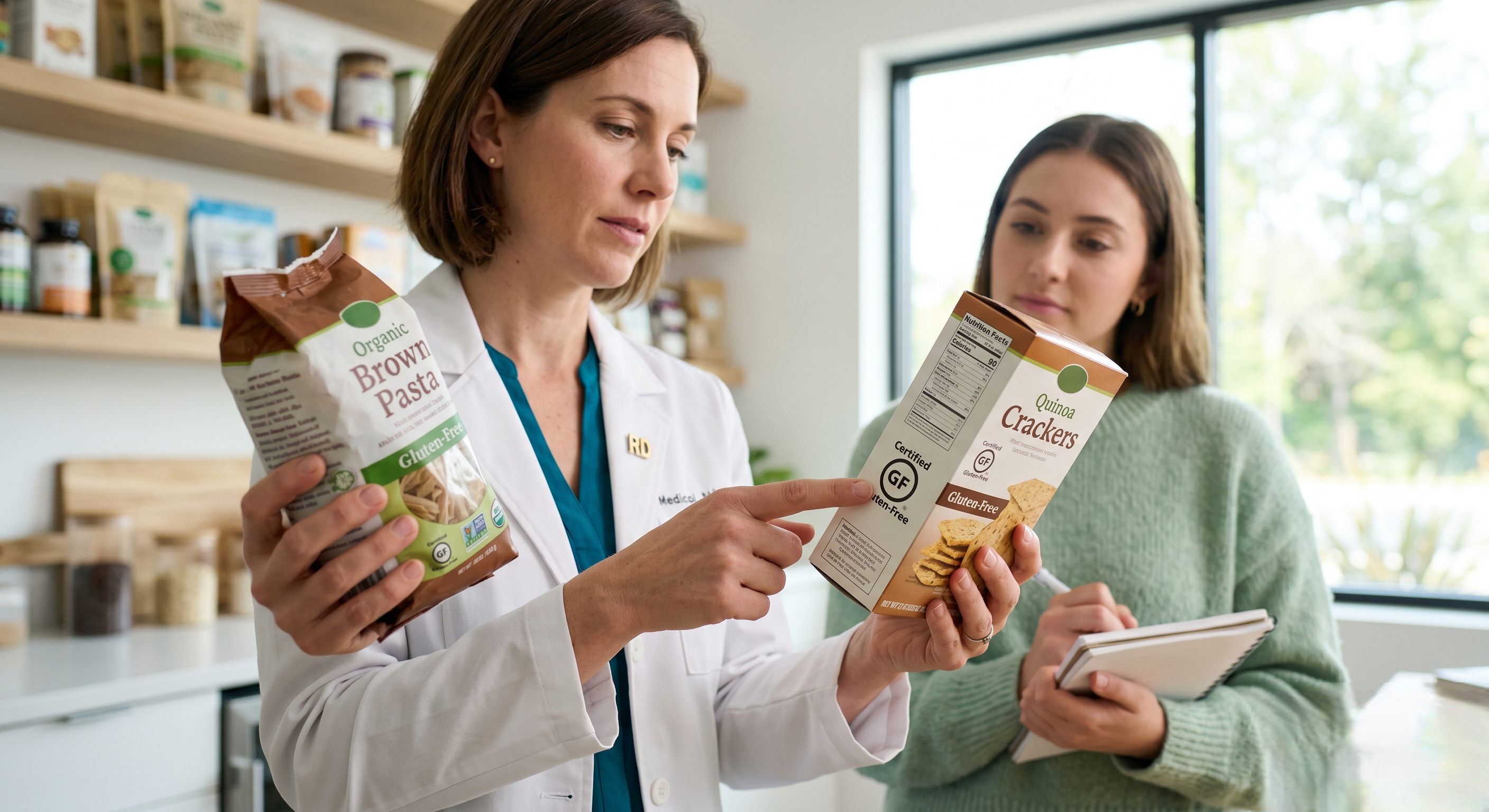
If you've ever stood in a grocery aisle squinting at two boxes of crackers — one stamped with a "Certified Gluten-Free" seal and another simply reading "gluten-free" on the front — you've already spotted one of the most confusing distinctions in celiac-safe shopping. Both labels are governed by rules, but those rules come from very different places, with very different levels of oversight. For someone managing celiac disease or non-celiac gluten sensitivity, understanding that gap can be the difference between a calm afternoon and a flare-up that lasts for days. The good news is that once you know what each label actually promises, the choice becomes much simpler. This guide walks through the science, the standards, and the practical shopping habits that protect your gut.
The FDA "Gluten-Free" Label: The Legal Baseline
In the United States, any packaged food labeled "gluten-free," "no gluten," "free of gluten," or "without gluten" must comply with the FDA's 2013 final rule, which sets the maximum allowable gluten content at less than 20 parts per million (ppm). According to the Celiac Disease Foundation (celiac.org), this threshold was chosen because it reflects the lowest level that can be reliably detected by validated scientific tools and is generally considered safe for the vast majority of people with celiac disease. The rule applies to FDA-regulated foods, which covers most packaged grocery items, dietary supplements, and imported foods sold in the U.S. Importantly, manufacturers self-certify compliance — they are not required to test every batch or submit results to the FDA before using the label.
That self-certification model is where many shoppers get tripped up. The FDA does perform random sampling and can take enforcement action against products that exceed 20 ppm, but oversight is reactive rather than proactive. A 2014 study published in the Journal of the Academy of Nutrition and Dietetics (PubMed ID: 25467593) found that while most products labeled gluten-free met the standard, a small but measurable percentage — particularly grain-based items like oats and flours — tested above the legal limit. For someone with celiac disease, where research from the Mayo Clinic shows that even trace exposure can trigger immune-mediated damage to the small intestine, "most" is not the same as "all."
What "Certified Gluten-Free" Actually Means
Certification programs are private, third-party schemes that go beyond the FDA's baseline. The two most common seals you'll see in North America are the Gluten-Free Certification Organization (GFCO), which sets a stricter limit of 10 ppm, and the Celiac Support Association, which historically required products to test below 5 ppm. A third option, NSF International's gluten-free certification, also operates at 20 ppm but adds rigorous facility audits, supplier vetting, and ongoing batch testing. Earning any of these seals involves on-site inspections, ingredient traceability documentation, equipment cleaning protocols, and recurring random testing — none of which the FDA rule mandates.
Why the Stricter Threshold Matters
The 20 ppm FDA limit is safe for most people with celiac disease, but research summarized by the National Institute of Diabetes and Digestive and Kidney Diseases (NIDDK) notes that a meaningful subset of patients are "super-sensitive" and react to amounts well below that ceiling. A frequently cited 2007 trial in the American Journal of Clinical Nutrition (PubMed ID: 17209192) found that daily exposure to even 50 mg of gluten — roughly the amount in 1/100th of a slice of bread — caused intestinal damage in some celiac participants. Stricter certification thresholds (10 ppm or 5 ppm) build in a wider safety margin, which is particularly meaningful for people who continue to experience symptoms despite a strict gluten-free diet, and for children whose growing intestines are more vulnerable to repeated low-dose exposure.
Cross-Contamination: The Hidden Risk in "Gluten-Free" Foods
One of the biggest practical advantages of certified products is their handling of shared facilities. Many naturally gluten-free foods — oats, lentils, quinoa, spices, even chocolate — are processed in plants that also handle wheat, barley, or rye. Under FDA rules, a product made on shared equipment can still legally be labeled gluten-free as long as the finished item tests under 20 ppm, and "may contain wheat" advisory statements are voluntary, not required. Certification programs like GFCO require dedicated lines or validated cleaning protocols and typically prohibit ambiguous shared-facility claims. If you cook from scratch often, you can sidestep many of these risks by choosing single-ingredient certified staples and building meals at home — you can explore gluten-free recipes at GF Cooking for ideas that lean on naturally safe ingredients.
Other Labels You'll See — And What They Don't Mean
- "Wheat-Free": Not the same as gluten-free. Spelt, kamut, barley, rye, and triticale all contain gluten but are not wheat. A wheat-free pretzel made with barley malt is still unsafe for celiacs.
- "Made in a gluten-free facility": A meaningful claim, but not regulated. Verify with the manufacturer if you don't see a certification seal.
- "Naturally gluten-free": Marketing language. Plain rice is naturally gluten-free, but if it's processed alongside wheat, it can still be contaminated.
- "Gluten-removed" beers: Brewed from barley and treated with enzymes. The Celiac Disease Foundation does not consider these safe because current testing cannot reliably measure residual gluten fragments after enzymatic breakdown.
- "Certified Gluten-Free Oats": Worth seeking out. Conventional oats are heavily contaminated in the field and during transport; certified gluten-free oats use purity protocols or mechanical/optical sorting.
Practical Shopping Strategy
For most people newly diagnosed with celiac disease, the safest approach is to prioritize certified products for high-risk categories — flours, oats, baking mixes, granola, pasta, baked goods, and anything processed from grains — while relying on FDA-labeled gluten-free products for lower-risk items like plain dairy, fresh produce, and single-ingredient meats. If you're persistently symptomatic despite a strict diet, a 2019 study in Gastroenterology suggests that switching to products certified at 10 ppm or below for a trial period can help identify whether trace exposure is the culprit. Keeping a simple food journal during this trial — listing brands, certifications, and any symptoms — turns shopping from guesswork into data. For meal inspiration that minimizes label-reading altogether, you can explore gluten-free recipes at GF Cooking built around naturally safe whole foods.
Key Takeaways
- FDA "gluten-free" means under 20 ppm and is self-certified by manufacturers — safe for most people with celiac disease, but not independently verified.
- "Certified Gluten-Free" seals (GFCO, NSF, CSA) add third-party audits, batch testing, and stricter thresholds (often 10 ppm or below).
- Prioritize certification for high-risk foods like oats, flours, baking mixes, and grain-based products where cross-contamination risk is highest.
- "Wheat-free" is not gluten-free, and "gluten-removed" beers are not considered safe for people with celiac disease.
- If symptoms persist on a gluten-free diet, switching to certified products and consulting a celiac-experienced dietitian can help isolate trace exposure as a possible cause.


Comments
Post a Comment